
You have probably been to a wedding where you left thinking, “That couple really has their act together,” or maybe, “That was chaos from start to finish.” What you might not realize is that wedding guests play a bigger role in that outcome than most people admit. A wedding is not a concert you attend; it is a social event you participate in. Your behavior shapes the day, affects the couple’s stress levels, and determines whether you get invited to the next big milestone. Getting it right is not complicated, but it does require paying attention to details that rarely get spelled out about wedding guest etiquette.
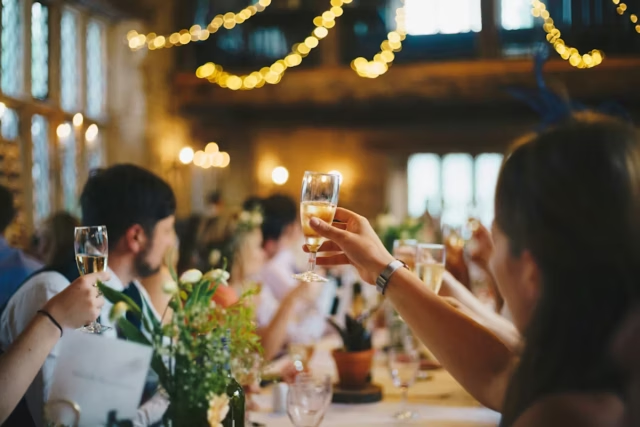
Via Unsplash
Assuming Your Presence Is the Present
This is one of the most common misunderstandings, and it is almost always well-intentioned. You look at your calendar, see the wedding date, book your travel, and figure that showing up is enough. After all, you took time off work and bought a plane ticket. That is a real investment, and it matters.
But here is the bigger picture: a wedding invitation is not a ticketed event—it is an invitation to celebrate a major life milestone. While travel and time are meaningful commitments, they are separate from the tradition of giving a wedding gift. A gift is not about matching what the couple spent; it is about marking the occasion and offering your support as they begin married life together. Even a thoughtful, modest gift sent before or after the wedding carries far more meaning than scrambling at the last minute.
The impact of a gift is rarely about the dollar amount. Most couples are simply touched by the thought and effort behind it. Weddings do come with significant costs, but guests are not expected to “cover their plate.” What does stand out, however, is when someone makes the effort to acknowledge the occasion in a meaningful way. A gift—whatever the amount—signals, “We celebrate you and your new life together.”
The fix is straightforward. Plan your gift when you RSVP, not the week before. If you are traveling, ship it to their home ahead of time so they are not hauling boxes back from the venue. And here is where you can actually stand out: think about Personalized Wedding Gifts. Not monogrammed towels they did not register for, but something that connects to their actual relationship. A framed map of the city where they met. A cookbook from the region of their honeymoon with a note about a recipe to try together. It shows you thought about them specifically, not just checked a box. That is what gets remembered.
Wedding Guest Etiquette Every Guest Should Know
Ignoring the Plus-One Rules
Wedding invitations are not open-ended. When the envelope says “Ms. Jane Doe and Guest,” that means Jane gets to bring someone. When it says “Ms. Jane Doe,” it means Jane comes alone. This seems obvious, but people violate it constantly. They assume their long-term partner counts as a spouse, or they decide their new boyfriend will fit right in, or they think the couple will not notice one extra chair.
They notice. Venues have strict capacity limits set by fire codes and catering contracts. Seating charts take hours to arrange, and an unexpected guest throws off table numbers, meal counts, and the entire flow of the reception. The couple has to either squeeze someone in awkwardly or have an uncomfortable conversation at the door. Neither option makes them happy to see you.
If your invitation does not include a plus-one, do not ask for one. The couple made a choice based on budget and space. And if you are single and attending alone, do not treat it like a burden. Weddings are actually easier to navigate solo. You are not managing someone else’s introductions or worrying if they are having fun. You can focus on the couple and catch up with people you actually know.
Treating the Schedule as Suggestions
Wedding timelines exist for a reason. The photographer has two hours before sunset. The caterer needs to serve dinner by 7:00 p.m., or the food dries out. The venue charges overtime by the minute. When guests wander in late to the ceremony, skip the cocktail hour, or decide to make their own dinner reservation instead of eating the provided meal, they create ripples that affect everyone.
Showing up to the ceremony twenty minutes late is not fashionably late. It is disruptive. The couple is already nervous, and seeing someone shuffle down the aisle during their vows breaks the moment. Skipping the reception events you find boring, like the first dance or cake cutting, sends a clear signal that you are there for the open bar, not the marriage. And leaving before the cake is cut without saying goodbye to the couple? That is just rude.
Making It About Your Experience
Weddings are not consumer experiences. You are not reviewing a restaurant on Yelp. Yet guests constantly complain about the food, the music, the seating arrangements, or the lack of an open bar, as if the couple owes them entertainment. They post critical comments on social media before the night is over. They cornered the bride to ask why they were not in the wedding party. They treat the event like a production they are entitled to judge.
The solution is to shift your mindset. You are there to witness a commitment and support a relationship, not to be entertained. If the food is mediocre, eat it anyway and get tacos on the way home. If the music is not to your taste, dance badly for one song and then catch up with your tablemates. Your job is to add positive energy, not critique the production value. The couple will remember who made them feel supported, not who had the most sophisticated palate.
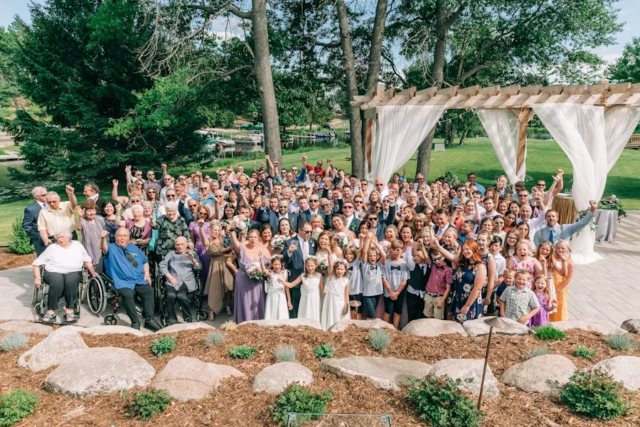
Via Unsplash
Forgetting the Follow-Up
The wedding ends, you go home, and life returns to normal for you. For the couple, they are entering one of the most intense transitions of their lives: combining households, merging finances, possibly moving, and adjusting to a new identity. The guests who disappear after the reception, who never acknowledge the gift or send a message about the photos, become part of the post-wedding drop-off that many couples find isolating.
Being a good wedding guest is not about perfection. You will forget a name, dance awkwardly, or spill wine on your shirt. Those moments are human and usually forgiven. What is not forgiven is the self-centeredness that treats a wedding like a backdrop for your own experience. The couple invited you because you matter to them. Act as they matter to you, too.
Of course, etiquette and graciousness aren’t just the guest’s responsibility. As the host, you have a part to play, too. For a reminder of what that looks like, check out Why Is Another Bride Angry Over A Wedding Gift?.
* This is a contributed post
I hope you found this information useful!
Hearts, Joy, Love!
Jean
Author of “Wedding Invitations, RSVPs, and More! Oh My!” and “From ‘I Will’ to ‘I Do’”

